Center Director Alan Abramson Discusses President Trump’s Federal Spending Cuts in Chronicle of Philanthropy Article

Center Director Professor Alan Abramson was cited in a recent article in The Chronicle of Philanthropy on the impact of President Trump’s federal spending cuts on the nonprofit sector. Dr. Abramson and several other philanthropy experts referred back to President Reagan’s economic policies in the 1980s to explore possible parallels with the current cuts. 

Ultimately, the Reagan era experience may have mixed relevance for the current situation. While both the Reagan and Trump administrations pushed for substantial cuts in social service and other programs, the former also made a point of supporting private philanthropy as an alternative to government funding. As a result, in the early 1980s President Reagan and Congress legislated new tax incentives for charitable giving, and the fundraising profession grew exponentially. Some smaller nonprofits shut their doors, but many large and medium-sized nonprofits were able to weather the storm, in part because after an initial round of budget cuts Congress refused to go along with the president’s proposals for additional, significant reductions.  

In contrast to the Reagan experience, the Trump administration has not so far supported increased philanthropy and, in fact, has been openly critical of foundations and nonprofits, threatening to remove the tax-exempt status of some nonprofits, including Harvard University, and apparently considering increased taxation of nonprofit endowments. 

For both administrations, it is important to understand the importance of government funding in the balance sheet of many nonprofits. While many believe that philanthropic support makes up the largest portion of nonprofit revenue, in reality, government funding is two to three times greater than charitable contributions from all individuals, foundations, and corporations for the nonprofit sector as a whole. As research in the early 1980s about the Reagan era cuts by Alan Abramson and his then-colleague Lester Salamon showed, even with increased incentives for giving it was next to impossible for private philanthropy to fully offset significant government cuts in the short-run, and there is no assurance that private donors would even want to do so or would direct their support to nonprofits experiencing cuts. 

To read the full article on The Chronicle of Philanthropy’s website, click here

The Center on Nonprofits, Philanthropy, and Social Enterprise Hosts Dr. Samir Abu Rumman as Visiting Research Scholar

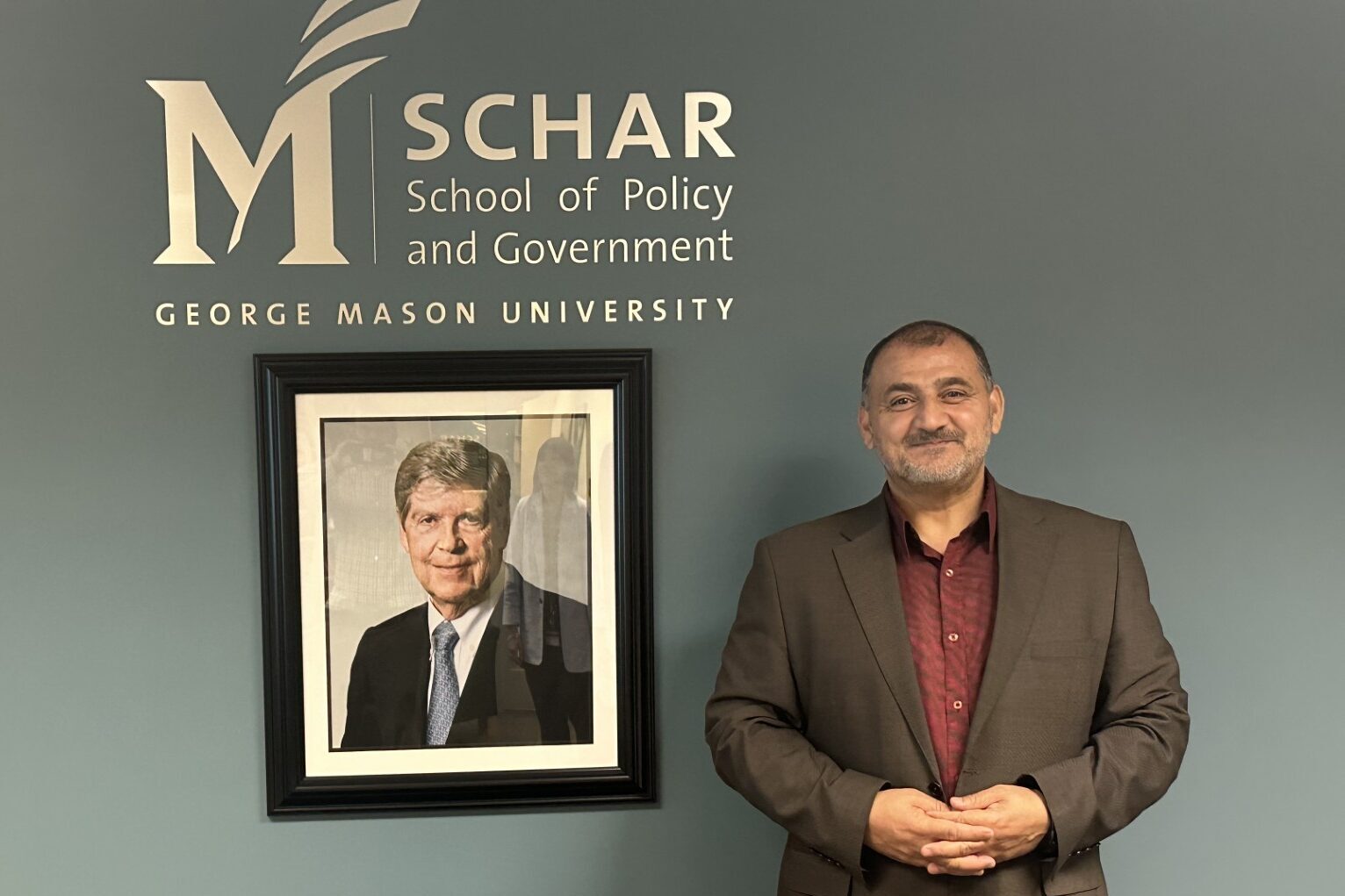
The Center on Nonprofits, Philanthropy, and Social Enterprise at George Mason University’s Schar School of Policy and Government is excited to host Dr. Samir Abu Rumman, PhD as a visiting research scholar for the 2024-25 academic year.

Dr. Abu Rumman’s research focuses on the influence Gulf countries gain through their funding of the United Nations (UN). To date, he has conducted interviews with key figures in Bahrain, Kuwait, and Qatar and advised nonprofits to maximize their membership benefits during a presentation to the Economic and Social Council (ECOSOC) of the UN.

Additionally, Dr. Abu Rumman has led a number of training sessions and consultations for nonprofit and philanthropic leaders in the region.

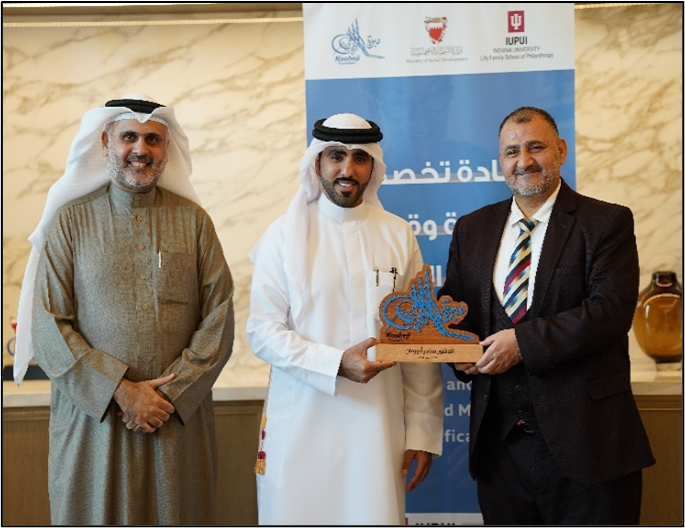
In December 2024, Dr. Abu Rumman delivered a transformative training program on philanthropic management and leadership to over 100 participants in Bahrain. The initiative, which was made possible by partners, collaborators, and sponsors such as GMU’s Nonprofit Center, the Lilly Family School of Philanthropy at Indiana University, the United Mission for Relief and Development (UMR Institute), the Al-Kooheji Foundation, and Bahrain’s Ministry of Social Development, hoped to enhance the philanthropic landscape in Bahrain.

Dr. Abu Rumman at the philanthropic management and leadership training in Bahrain in December 2024.

At the Association for Research on Nonprofit Organizations and Voluntary Action’s (ARNOVA) annual conference in November 2024, Dr. Abu Rumman, alongside fellow researchers, presented the initial findings from a set of multi-country surveys that interviewed Muslims worldwide about their perceptions and patterns of charitable giving. These findings are detailed in published reports from the Muslim Philanthropy Initiative at Indiana University for four countries, for which Dr. Abu Rumman is a co-author.

Additionally, Dr. Abu Rumman completed three country reports for Jordan, Kuwait, and Bahrain for the Global Philanthropy Environment Index published by Indiana University. Dr. Abu Rumman also recently conducted lectures and training sessions at Istanbul University, Kuwait University, Malaysia, and Indonesia, with over 200 participants.

Dr. Abu Rumman has over 20 years of experience in research, education, and development in different countries. He has led and supervised several regional and global research projects for organizations such as the World Values Survey and Arab Barometer, in part while affiliated with Princeton University. He is a consultant for the UMR Institute and the director and co-founder of the World of Opinions in Kuwait and Jordan. We at the Center are very pleased to have Dr. Abu Rumman with us as an affiliated scholar.

Announcing the Launch of George Mason University’s Nonprofit Works Data Explorer!

Explore 30+ years of comparative and contextual data on nonprofit employment, establishments, and wages

We are happy to announce the launch of the new Nonprofit Works: An Interactive Database on Nonprofit Employment and Wages, fully re-developed and updated by the George Mason University – Nonprofit Employment Data (GMU-NED) Project with support from the C.S. Mott Foundation!

With the launch of the new GMU-Nonprofit Works Data Explorer, which was previously hosted at Johns Hopkins University, you can now search and download the latest available data on nonprofit employment, establishments, and weekly and annual average wages by field for over thirty years—from 1990 through 2022—and compare nonprofits to for-profits and government over the full period. GMU-Nonprofit Works draws on official U.S. Bureau of Labor Statistics surveys that also cover government and for-profit workplaces—making it possible to compare nonprofit employment and wages to those in these other sectors over time.

The nonprofit sector is a vital part of the employment landscape of the U.S., employing the third largest workforce and generating the third largest payroll of any of the 18 industries into which statistical authorities divide the American economy—larger than all branches of manufacturing combined, and behind only retail trade and accommodation and food services. What is more, nonprofits employ nearly 89% of all workers providing community, food, housing, and emergency relief services, more than 66% of all workers in hospitals, and 35% of all social services workers in the country. These organizations are essential threads in our safety nets, without which more people would slip through and more communities would struggle.

Without ready access to hard data, however, nonprofit leaders and advocates often find themselves at a disadvantage in countering gross misperceptions about the considerable scale and economic contribution of these organizations or in alerting sector leaders to important sector trends, such as staffing and funding shortfalls.

This is where Nonprofit Works comes in by making it easy to access, download, and use the best available data on the nonprofit sector’s vital role as employers, wage payers, and service providers in our communities. As such, the new site comes at a critical time for the nonprofit sector, as it faces unprecedented challenges to its funding—including threats to government grants and payments and declining individual giving.

Through GMU-Nonprofit Works’ easy-to-use Data Explorer, you will be able to quickly answer crucial questions like:

  • How many people work for nonprofits in your state, county, or city?
  • In what fields are these nonprofit jobs concentrated?
  • How do nonprofit jobs and wages compare to those in for-profit companies or government agencies working in the same fields?
  • How much have nonprofits contributed to job growth?
  • What key trends are affecting nonprofit employment or wages over a chosen time period?

It is our hope that GMU-Nonprofit Works will fill a gap in the tools available to nonprofit leaders, advocates, and researchers. We are eager to hear from users about their experience with the site and how these data are used. Please feel free to reach out to us with questions, comments, suggestions, use cases, and any other feedback you may have as you explore the site.


About the Center on Nonprofits, Philanthropy, and Social Enterprise in the Schar School of Policy and Government at George Mason University
The
Center on Nonprofits, Philanthropy, and Social Enterprise seeks to improve the effectiveness of nonprofit organizations, philanthropy, and social enterprise through research, training, public education, and other initiatives that engage those who care about these important institutions and activities. Current major interests are: the state of the regional, national, and international nonprofit sectors; increasing the usefulness and accessibility of employment and other government data on the nonprofit sector; nonprofit-government relations; the role of foundations and philanthropy in our society; nonprofit accountability, governance, and effectiveness; global civil society; and social enterprise and social entrepreneurship. Mason’s center is a long-time member of the Nonprofit Academic Centers Council (NACC), the major association of university-based, nonprofit research centers in the U.S. Core center faculty members include Center Director Dr. Alan Abramson, Dr. Mirae Kim, and Dr. Stefan Toepler.

 
About the George Mason University – Nonprofit Employment Data Project (GMU-NED)
The
George Mason University – Nonprofit Employment Data (GMU-NED) Project generates new information on economic trends in the nonprofit sector and produces cutting-edge reports on key components of the nonprofit economy in regions and states across the country. These reports demonstrate the significant economic scale and importance of the nonprofit sector on the national, state, and regional levels. To produce these reports, the GMU-NED Project draws on data from the U.S. Bureau of Labor Statistics to document the size, composition, distribution, and growth of nonprofit employment and wages. The GMU-NED Project is also working to increase the usefulness and accessibility of other federal data on the nonprofit sector beyond BLS workforce data. The GMU-NED project is led by Center Director Dr. Alan Abramson, in collaboration with his Center faculty colleagues Dr. Stefan Toepler and Dr. Mirae Kim, and project consultant Chelsea Newhouse, and is supported by a generous grant from the Charles Stewart Mott Foundation.

Federal Staff Show Nonprofit Researchers How to Access Federal Data on Nonprofits at ARNOVA 2024

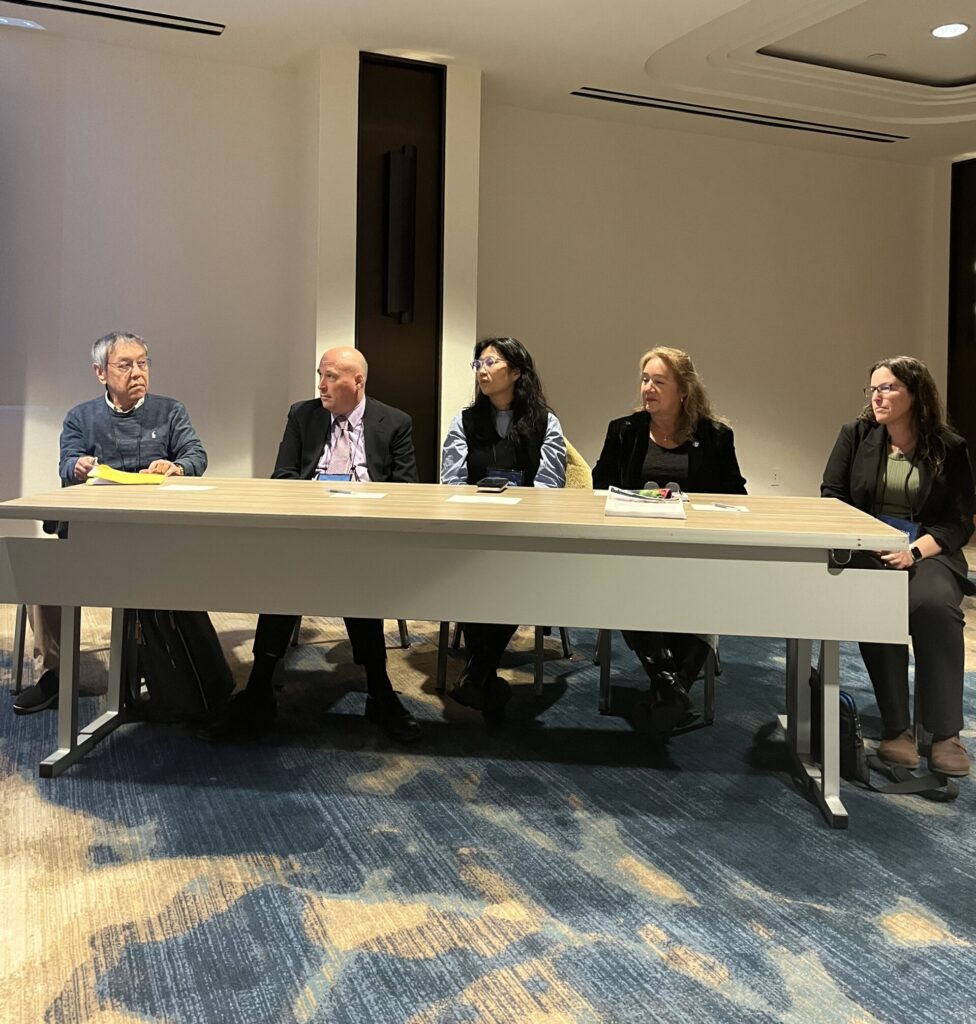
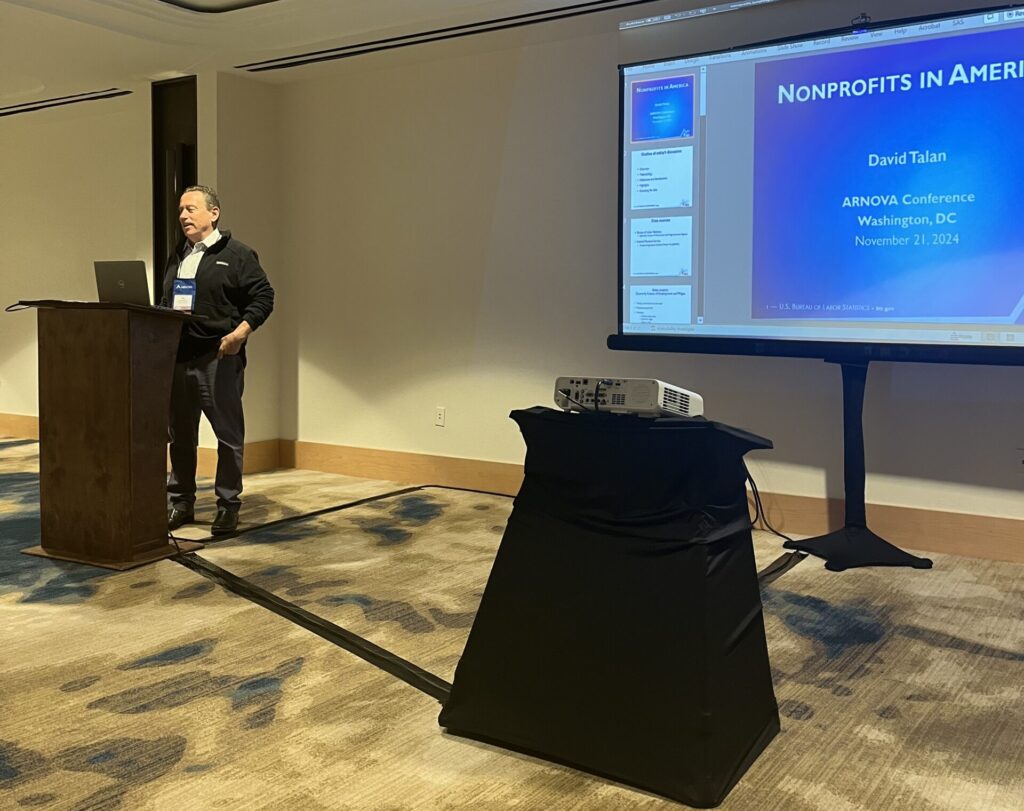
Center leader, Dr. Alan Abramson, brought together federal staff from several federal agencies to show nonprofit researchers how to access federal data regarding nonprofit employment, federal funding of nonprofits, volunteering, and more at the Association for Research on Nonprofit Organizations and Voluntary Action’s (ARNOVA) 2024 annual conference in Washington, DC on November 21.

Julie Beckhusen from the Census Bureau kicked off the panel by discussing the American Community Survey, a nationwide, continuous survey mailed to 3.5 million addresses. In the employment section of the survey, the class of worker variable categorizes workers by the type of organization they are employed by: for-profit, nonprofit, government, or self-employed. As a result, researchers can find data on the occupation, industry, means of transit, median earning, and sex of nonprofit employees. This data is available at data.census.gov. Users can also use the Census Bureau’s Microdata Access Tool (MDAT) to create custom tables with these data.

Next, Dr. Mary Hyde from AmeriCorps discussed the Volunteering and Civic Life Supplement to the Census Bureau’s Current Population Survey (CPS). This supplemental survey has been conducted every other year alongside the September version of the CPS since 2002. It provides data on formal and informal volunteering as well as political engagement across the country. Data from the 2023 Volunteering and Civic Life Supplement is now available on the Census Bureau’s website.

Grace Lim from the Treasury Department’s Bureau of Fiscal Service followed by telling attendees how they can access data regarding federal funding of nonprofits via USASpending.gov. USASpending.gov was established through the Digital Accountability and Transparency Act of 2014 and documents government awards to state and local governments, corporations, and nonprofits. Nonprofit data is sometimes available at the subaward level for federal programs that pass funding through state or local governments to nonprofits. Unfortunately, the subaward level data that shows funding going to nonprofits and other subawardees is incomplete for some programs, making it difficult to get a full picture of federal funds flowing to nonprofits.

Next, David Talan from the Bureau of Labor Statistics (BLS) explained how the agency merges data from its Quarterly Census of Employment and Wages (QCEW) and the Internal Revenue Service’s Exempt Organization Business Master File (EO BMF) to produce employment and wage data on nonprofit organizations. QCEW contains data on business establishments’ monthly employment, quarterly wages, industry, and employer identification number (EIN). The EO BMF is a list of exempt organizations’ names, industries, incomes, and EINs, but it does not include any employment and wage data. Using the two files, BLS is able to produce employment and wage data on 501(c)(3) nonprofit organizations. BLS currently releases this nonprofit data every five years, and the agency released data covering 2018-2022 earlier this year. You can find this data on the BLS’s Business Employment Dynamics webpage.

(Note: Mason’s Nonprofit Center has developed a report based on BLS’s nonprofit employment data for 2018-2022 that analyzes the impact of the COVID-19 pandemic on the nonprofit workforce.  The Center will also soon make available Nonprofit Works, an online portal that will allow users to pull down employment and wage data of interest.  For more information on the Center’s Nonprofit Employment Data (NED) project, please see the NED portion of our website).

Takashi Yamashita from the Bureau of Economic Analysis (BEA) concluded the ARNOVA panel by discussing how the agency publishes GDP data on the nonprofit sector. In BEA data, nonprofits are referred to as “nonprofit institutions serving households” (NPISH). Since nonprofit organizations do not sell many goods and services at market value, the BEA uses the cost of production to estimate the output of NPISH. Yamashita also provided some analysis of BEA’s NPISH data. According to Yamashita, NPISH has had a negative net saving since 2007. However, the NPISH balance sheet appears healthy, and NPISH net worth has increased over time. You can find NPISH data in the National Income and Product Account (NIPA) tables on BEA’s website.

By bringing together these panelists at the ARNOVA conference, the Nonprofit Center hoped to familiarize nonprofit researchers with the abundance of nonprofit data collected by federal agencies, and to make federal data staff more aware of other federal staff working with nonprofit data.  The Center will seek to advance both of these goals in its future work.

2024 Nonprofit Employment Data Report: New Data Reveal Nonprofits’ Strengths and Challenges in the COVID-19 Era

The Center on Nonprofits, Philanthropy, and Social Enterprise in George Mason University’s Schar School of Policy and Government is pleased to announce the release of the 2024 Nonprofit Employment Data Report from the George Mason University – Nonprofit Employment Data Project (GMU-NED).

This brief report provides a first look at new data from the U.S. Bureau of Labor Statistics (BLS) on nonprofit employment and wages between 2018 – 2022, focusing specifically on the 501(c)(3) portion of the nonprofit sector. Due to the unique nature of the underlying dataset, we are also able to compare nonprofit employment and wages to their counterparts in the for-profit sector during this crucial period.

The report is structured around five key findings to put the nonprofit paid workforce into context in terms of other major industries in the U.S. economy and in the fields in which it is most active, reveal how nonprofit employment was impacted by the onset of the COVID-19 pandemic and how they have recovered as of 2022, and assess aggregate nonprofit wages relative to for-profit sector counterparts and examine nonprofit and for-profit wage growth over the pandemic era. Among the findings:

  • As of 2022, the nonprofit sector’s 12.8 million workers made it the third largest employer in the U.S. non-government economy.

  • Between 2019 and 2020, when the COVID-19 pandemic began, nonprofit employment declined by 580,000, or 4.5%, but nonprofits fared better than for-profits overall, which shed nearly 7% of their workers.

  • However, nonprofits faced challenges in re-staffing in 2021 and 2022, lagging behind their for-profit counterparts. This left the nonprofit sector with a workforce 1.4% smaller than it enjoyed in 2019, while for-profit entities grew their workforce by 2.2%.

  • As a result, nonprofits lost ground to for-profit counterparts in terms of market share. The nonprofit share of the total non-government workforce decreased from 10.2% in 2017 to 9.9% in 2022, reflecting losses in nearly all fields in which they are significantly active.

  • Overall, nonprofit average annual wages per employee remained nearly equal to those paid by for-profits in 2022—and were much higher than for-profit wages in many of the key nonprofit fields.

As we approach the 5-year anniversary of the onset of the COVID-19 pandemic, these new data from the BLS provide important insight into both the strengths of and challenges faced by the nonprofit sector both during and after the pandemic. The picture that emerges is of a sector that, though resilient, continues to confront obstacles in fully recovering from pandemic-era shocks. Overall, as detailed in the report, as of 2022, nonprofits had restored nearly 70% of the more than half-million workforce losses they suffered in 2020—but that left significant ground to cover to get back to the employment levels they enjoyed in 2019 in several key fields, and even further to go to catch up to where the sector’s workforce would have been without those losses.

Led by Center Director Dr. Alan Abramson, in collaboration with his Center faculty colleagues Dr. Stefan Toepler and Dr. Mirae Kim, the GMU-NED Project aims to continue and expand on the important prior work of Johns Hopkins University’s Center for Civil Society Studies. Produced by former Johns Hopkins Project Manager and current GMU-NED Research Consultant Chelsea Newhouse, in collaboration with GMU Nonprofit Center Director Dr. Alan Abramson, this new report also previews the Project’s plans for further explorations of the these new BLS data, including the imminent launch of the new George Mason University Nonprofit Works data explorer site that will allow users to explore and download the data they need to support their work. The Center on Nonprofits, Philanthropy, and Social Enterprise is grateful to the Charles Stewart Mott Foundation for its continuing support of this work.

To read the full report, please click here.

To learn more about the GMU-NED Project, click here.


For press inquiries, contact:

Aurora King, [email protected]

If you would like to keep up-to-date on new data, initiatives, and developments in the nonprofit employment and wage data space, please be sure to subscribe to our mailing list here.