Center Faculty Participating in ARNOVA’s Annual Conference from November 20-22

The Association for Research on Nonprofit Organizations and Voluntary Action’s (ARNOVA) 54th annual conference will be held at the Indianapolis Marriott Downtown from November 20, 2025, through November 22, 2025.

This year’s theme, “The Evolving Role of Philanthropy in Global, National, and Local Contexts,” will be explored within two plenary sessions, 180+ panel/paper presentation sessions, a poster session, and several networking opportunities. The key topics of this event will cover philanthropy’s shifting relationships with government and the nonprofit sector, the power dynamics of philanthropic practices, and the shifting role of philanthropy within globalization.

GMU’s Nonprofit Center faculty members Alan Abramson, Stephan Toepler, and Mirae Kim will be participating in several sessions over the course of the conference. See below for details.

Panelists: Mirae Kim, George Mason University; Chengxin Xu, Seattle University; Jesse Lecy, Arizona State / Urban Institute; Kathy Quick, University of Minnesota

“Risk-Takers vs. Public Servants? Exploring the Varied Motivations of Founding and Non-Founding Nonprofit Executive Directors” by Mirae Kim, George Mason University

“Does Innovation Really Lead to Growth? A Longitudinal Study Across Subsectors in Nonprofits” by Chenxin Zhang, The University of Texas Austin; Ji Ma, The University of Texas Austin

“Understanding Informal Healthcare and Roles of Nonprofits for Underserved Communities” by Jiwon Suh, University of Texas at Arlington; Luis Macias, University of Texas at Arlington; Lakristie Davis, University of Texas at Arlington

“Disentangling The Nonprofit Founder Notion” by Fredrik O Andersson, Indiana University, Indiana University

“Research About Foundations In Global Perspectives: Conceptual Frameworks, Potentials, And Challenges” by Tamaki Onishi, University of North Carolina Greensboro; Stefan Toepler, George Mason University

“Why Is Household Giving Declining In The Netherlands, The United Kingdom, And The United States?” by Rene Bekkers, “Faculty of Social Sciences, Vrije Universiteit (VU) Amsterdam”; Christopher Einolf, Northern Illinois University; Xiao Han, Indiana University Lilly Family School of Philanthropy; Mark Ottoni-Wilhelm, Indiana University Indianapolis; Marlou Ramaekers, Vrije Universiteit Amsterdam; Sarah Smith, University of Bristol

“Who Is Asked To Give? Insights From Givingpulse, A Weekly U.S. Generosity Survey” by Samir Khan, GivingTuesday; Marc Maxmeister, GivingTuesday; Annie Collins, GivingTuesday

“Global Philanthropy and Cross-Border Giving” by Susan Appe, State University of New York Albany; Jiwon Park, Rockefeller College of Public Affairs and Policy, University at Albany, SUNY

Panelists: Alan Abramson, George Mason University; Joanne Carman, University of North Carolina Charlotte; Lewis Faulk, American University; Marlene Walk, Albert-Ludwigs-Universität Freiburg; Roseanne Mirabella, Kean University

Panelists: Mirae Kim, George Mason University; Sung-Ju Kim, North Carolina State University; Jiwon Suh, University of Texas at Arlington; Seongho An, University of Central Florida; Byung Hee Min, Wayne State University; Bok Gyo Jeong, Kean University

Panelists: Mirae Kim, George Mason University; Lewis Faulk, American University; Laura Tomasko, Urban Institute; Hannah Martin, Urban Institute

Panelists: Stefan Toepler, George Mason University; Steven Smith, Georgetown University; Beth Gazley, Indiana University Bloomington; Mary Tschirhart, The George Washington University

Discussants: Mirae Kim, George Mason University; Susan Appe, State University of New York Albany; Allison Ownby, Nonprofit Center of Northeast Florida; Kandyce Fernandez Sawyer, Johns Hopkins University

Additionally, George Mason University’s Schar School of Policy and Government is proudly sponsoring the ARNOVA Reception in partnership with the Evans School of Public Policy and Governance at the University of Washington. Please join us on Thursday evening from 6 to 7:30 PM in the Ballroom Foyer of the Indianapolis Marriott Downtown.

To learn more about the conference and register to attend, visit the event’s webpage. Please be sure to check the Center on Nonprofits, Philanthropy, and Social Enterprise’s website and follow us on LinkedIn for updates on our faculty’s presentations and more.

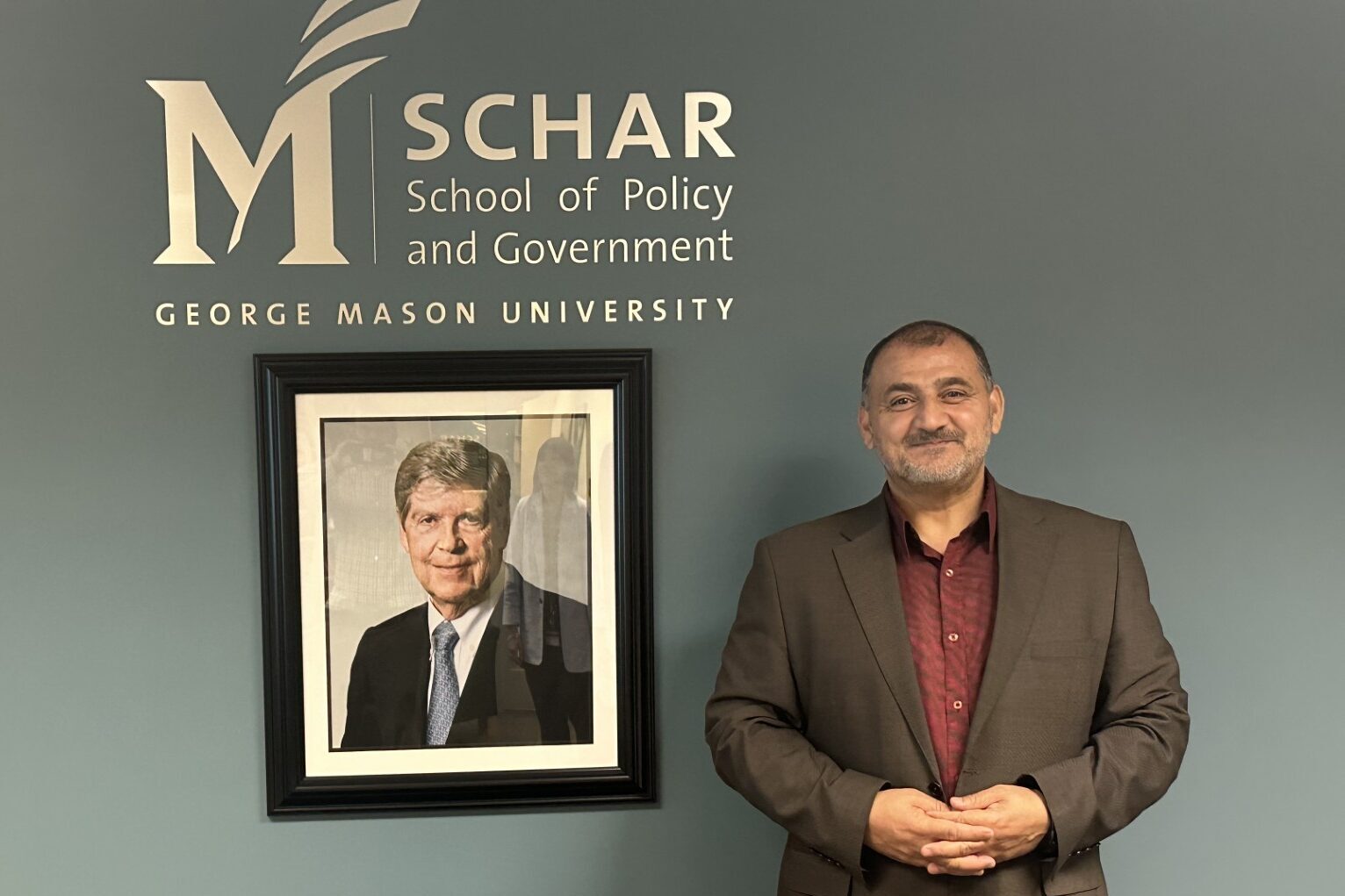
The Center on Nonprofits, Philanthropy, and Social Enterprise Hosts Dr. Samir Abu Rumman as Visiting Research Scholar

The Center on Nonprofits, Philanthropy, and Social Enterprise at George Mason University’s Schar School of Policy and Government is excited to host Dr. Samir Abu Rumman, PhD as a visiting research scholar for the 2024-25 academic year.

Dr. Abu Rumman’s research focuses on the influence Gulf countries gain through their funding of the United Nations (UN). To date, he has conducted interviews with key figures in Bahrain, Kuwait, and Qatar and advised nonprofits to maximize their membership benefits during a presentation to the Economic and Social Council (ECOSOC) of the UN.

Additionally, Dr. Abu Rumman has led a number of training sessions and consultations for nonprofit and philanthropic leaders in the region.

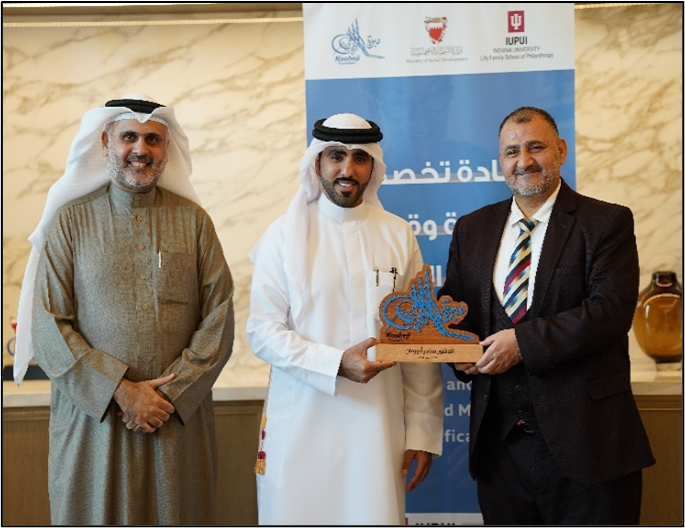
In December 2024, Dr. Abu Rumman delivered a transformative training program on philanthropic management and leadership to over 100 participants in Bahrain. The initiative, which was made possible by partners, collaborators, and sponsors such as GMU’s Nonprofit Center, the Lilly Family School of Philanthropy at Indiana University, the United Mission for Relief and Development (UMR Institute), the Al-Kooheji Foundation, and Bahrain’s Ministry of Social Development, hoped to enhance the philanthropic landscape in Bahrain.

Dr. Abu Rumman at the philanthropic management and leadership training in Bahrain in December 2024.

At the Association for Research on Nonprofit Organizations and Voluntary Action’s (ARNOVA) annual conference in November 2024, Dr. Abu Rumman, alongside fellow researchers, presented the initial findings from a set of multi-country surveys that interviewed Muslims worldwide about their perceptions and patterns of charitable giving. These findings are detailed in published reports from the Muslim Philanthropy Initiative at Indiana University for four countries, for which Dr. Abu Rumman is a co-author.

Additionally, Dr. Abu Rumman completed three country reports for Jordan, Kuwait, and Bahrain for the Global Philanthropy Environment Index published by Indiana University. Dr. Abu Rumman also recently conducted lectures and training sessions at Istanbul University, Kuwait University, Malaysia, and Indonesia, with over 200 participants.

Dr. Abu Rumman has over 20 years of experience in research, education, and development in different countries. He has led and supervised several regional and global research projects for organizations such as the World Values Survey and Arab Barometer, in part while affiliated with Princeton University. He is a consultant for the UMR Institute and the director and co-founder of the World of Opinions in Kuwait and Jordan. We at the Center are very pleased to have Dr. Abu Rumman with us as an affiliated scholar.

Federal Staff Show Nonprofit Researchers How to Access Federal Data on Nonprofits at ARNOVA 2024

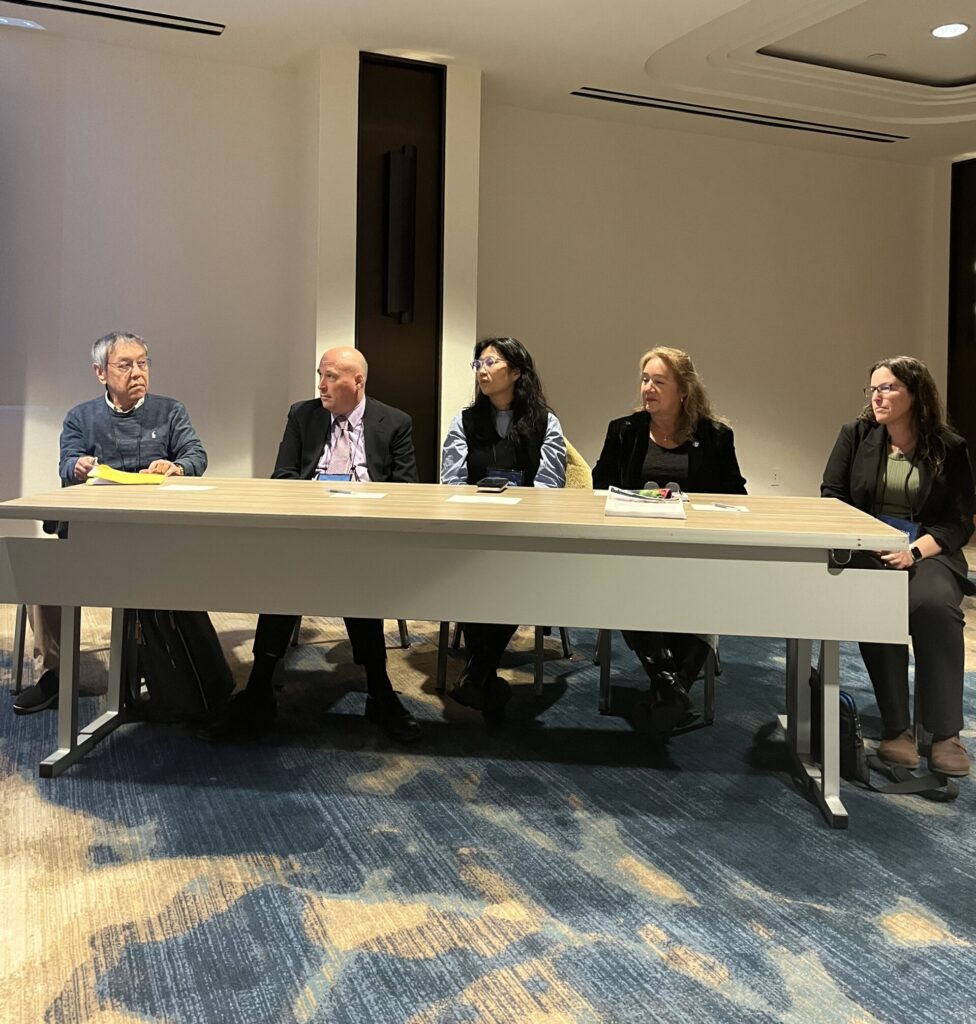
Center leader, Dr. Alan Abramson, brought together federal staff from several federal agencies to show nonprofit researchers how to access federal data regarding nonprofit employment, federal funding of nonprofits, volunteering, and more at the Association for Research on Nonprofit Organizations and Voluntary Action’s (ARNOVA) 2024 annual conference in Washington, DC on November 21.

Julie Beckhusen from the Census Bureau kicked off the panel by discussing the American Community Survey, a nationwide, continuous survey mailed to 3.5 million addresses. In the employment section of the survey, the class of worker variable categorizes workers by the type of organization they are employed by: for-profit, nonprofit, government, or self-employed. As a result, researchers can find data on the occupation, industry, means of transit, median earning, and sex of nonprofit employees. This data is available at data.census.gov. Users can also use the Census Bureau’s Microdata Access Tool (MDAT) to create custom tables with these data.

Next, Dr. Mary Hyde from AmeriCorps discussed the Volunteering and Civic Life Supplement to the Census Bureau’s Current Population Survey (CPS). This supplemental survey has been conducted every other year alongside the September version of the CPS since 2002. It provides data on formal and informal volunteering as well as political engagement across the country. Data from the 2023 Volunteering and Civic Life Supplement is now available on the Census Bureau’s website.

Grace Lim from the Treasury Department’s Bureau of Fiscal Service followed by telling attendees how they can access data regarding federal funding of nonprofits via USASpending.gov. USASpending.gov was established through the Digital Accountability and Transparency Act of 2014 and documents government awards to state and local governments, corporations, and nonprofits. Nonprofit data is sometimes available at the subaward level for federal programs that pass funding through state or local governments to nonprofits. Unfortunately, the subaward level data that shows funding going to nonprofits and other subawardees is incomplete for some programs, making it difficult to get a full picture of federal funds flowing to nonprofits.

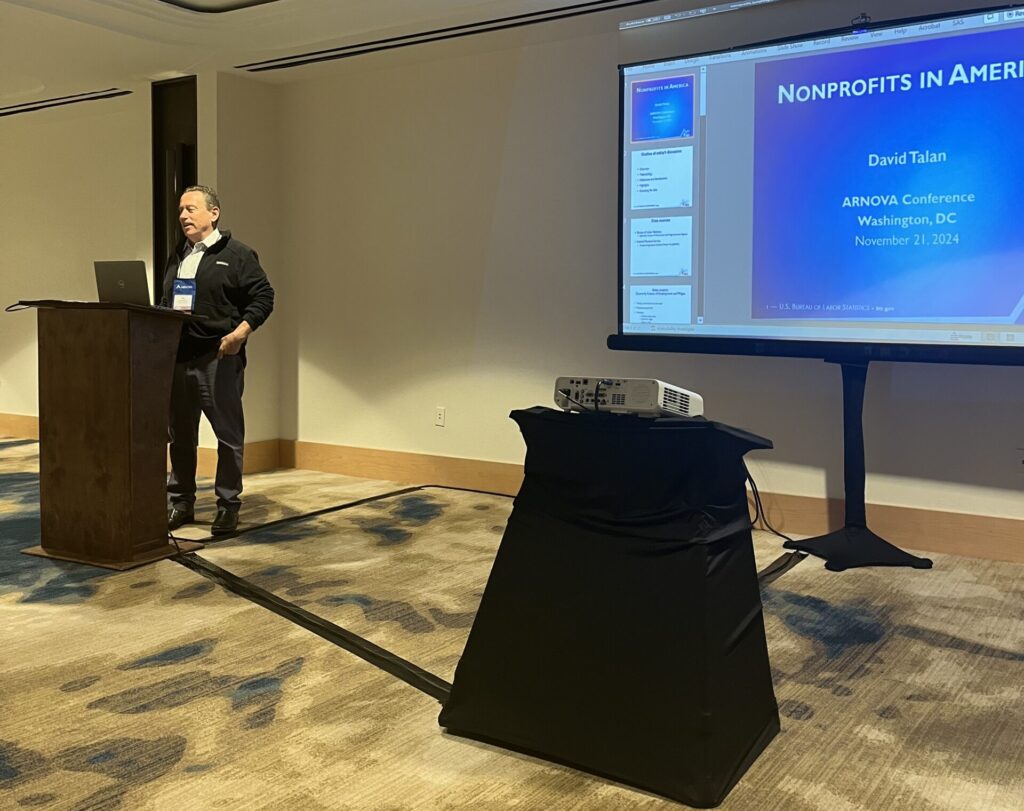
Next, David Talan from the Bureau of Labor Statistics (BLS) explained how the agency merges data from its Quarterly Census of Employment and Wages (QCEW) and the Internal Revenue Service’s Exempt Organization Business Master File (EO BMF) to produce employment and wage data on nonprofit organizations. QCEW contains data on business establishments’ monthly employment, quarterly wages, industry, and employer identification number (EIN). The EO BMF is a list of exempt organizations’ names, industries, incomes, and EINs, but it does not include any employment and wage data. Using the two files, BLS is able to produce employment and wage data on 501(c)(3) nonprofit organizations. BLS currently releases this nonprofit data every five years, and the agency released data covering 2018-2022 earlier this year. You can find this data on the BLS’s Business Employment Dynamics webpage.

(Note: Mason’s Nonprofit Center has developed a report based on BLS’s nonprofit employment data for 2018-2022 that analyzes the impact of the COVID-19 pandemic on the nonprofit workforce.  The Center will also soon make available Nonprofit Works, an online portal that will allow users to pull down employment and wage data of interest.  For more information on the Center’s Nonprofit Employment Data (NED) project, please see the NED portion of our website).

Takashi Yamashita from the Bureau of Economic Analysis (BEA) concluded the ARNOVA panel by discussing how the agency publishes GDP data on the nonprofit sector. In BEA data, nonprofits are referred to as “nonprofit institutions serving households” (NPISH). Since nonprofit organizations do not sell many goods and services at market value, the BEA uses the cost of production to estimate the output of NPISH. Yamashita also provided some analysis of BEA’s NPISH data. According to Yamashita, NPISH has had a negative net saving since 2007. However, the NPISH balance sheet appears healthy, and NPISH net worth has increased over time. You can find NPISH data in the National Income and Product Account (NIPA) tables on BEA’s website.

By bringing together these panelists at the ARNOVA conference, the Nonprofit Center hoped to familiarize nonprofit researchers with the abundance of nonprofit data collected by federal agencies, and to make federal data staff more aware of other federal staff working with nonprofit data.  The Center will seek to advance both of these goals in its future work.